Norbert Wiener: Father of Cybernetics
The mathematician who gave the world its name for control and communication
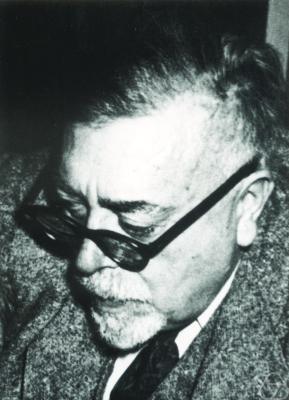
Norbert Wiener was born on 26 November 1894 in Columbia, Missouri, to Leo Wiener, a professor of German and Slavic languages. Educated largely at home by his father, Wiener showed extraordinary ability from an early age — entering Tufts College at just eleven and earning his bachelor's degree in mathematics by fourteen. He went on to complete a doctorate in mathematical logic at Harvard while still a teenager, before studying further under some of the leading mathematicians and philosophers of the era in England and Germany.
After the First World War, Wiener joined the mathematics faculty at the Massachusetts Institute of Technology, where he would remain for the rest of his career. His early research spanned pure mathematics, including foundational work on Brownian motion and harmonic analysis — contributions still remembered today through concepts such as the Wiener process and the Wiener filter.
It was during the Second World War, while working on the mathematics of predicting the motion of anti-aircraft targets, that Wiener's thinking took the turn that would define his legacy. Studying how machines could sense error, adjust, and correct their own behaviour through feedback led him to a much broader idea: that the same principles of communication and control could describe living organisms, machines, and society alike.
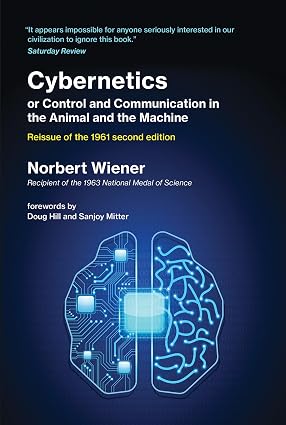
Wiener gave this new field its name in 1948, with the publication of his landmark book, Cybernetics: Or Control and Communication in the Animal and the Machine. Drawing the term from the Greek word for "steersman," the book introduced feedback and regulation as a unifying language for engineering, biology, and computing, and brought Wiener recognition far beyond mathematics.
Beyond his technical work, Wiener was also an early and vocal advocate for the responsible use of science and technology. In the years after the war, he grew increasingly concerned about the militarisation of research, and argued publicly that scientists bore an ethical responsibility for how their discoveries were used — a concern that feels especially relevant in today's age of automation and artificial intelligence.
Norbert Wiener died on 18 March 1964 in Stockholm. His work laid the intellectual foundation for modern control theory, robotics, and computing, and the word he coined — cybernetics — remains the name for the discipline of understanding how systems, whether living or mechanical, sense, adapt, and govern themselves.
← Back to Go Cybernetics